Table of Contents
What is EVV and Why Does It Matter?
Put This Into Practice
CareCade makes it easy to implement best practices for home care management.
Electronic Visit Verification (EVV) is a technology that verifies home care visits actually happened. It captures:
- Date and time of the visit
- Location where services were provided
- Who provided the services
- What services were provided
- Who received the services
The 21st Century Cures Act requires EVV for all Medicaid-funded personal care services. Washington State has implemented these requirements for DDCS agencies.
Washington's EVV Requirements
Washington uses a flexible EVV model, meaning agencies can choose their own EVV system as long as it meets state requirements.
Required Data Elements
Your EVV system must capture:
- Type of service performed
- Individual receiving the service
- Date of service
- Location of service delivery
- Individual providing the service
- Time the service begins and ends
Acceptable Verification Methods
Washington accepts several methods for capturing EVV data:
- GPS verification: Captures location when caregiver clocks in/out
- Telephony: Caregiver calls from client's landline
- Biometric: Fingerprint or facial recognition
- Fixed device: Tablet or device at client location
Most modern agencies use GPS verification through mobile apps—it's the most flexible and least disruptive to caregivers.
Common EVV Compliance Mistakes
Mistake 1: Relying on Manual Entry
Some agencies have caregivers write down times and enter them later. This creates compliance risk:
- Times can be estimated or fabricated
- No location verification
- Auditors can spot inconsistencies
Solution: Use real-time clock-in with GPS capture.
Mistake 2: Not Training Caregivers
EVV only works if caregivers use it correctly. Common issues:
- Forgetting to clock in until after the visit
- Clocking in from the wrong location
- Not understanding how to handle schedule changes
Solution: Comprehensive training and simple, intuitive tools.
Mistake 3: Ignoring Failed Verifications
When GPS doesn't verify correctly, some agencies just override it without investigation. This defeats the purpose of EVV and creates audit risk.
Solution: Review exceptions, document reasons, and address patterns.
Mistake 4: Keeping EVV Separate from Billing
If your EVV data doesn't flow automatically into billing, you're creating extra work and opportunities for errors.
Solution: Integrated systems that connect verification to billing.
How GPS Verification Works
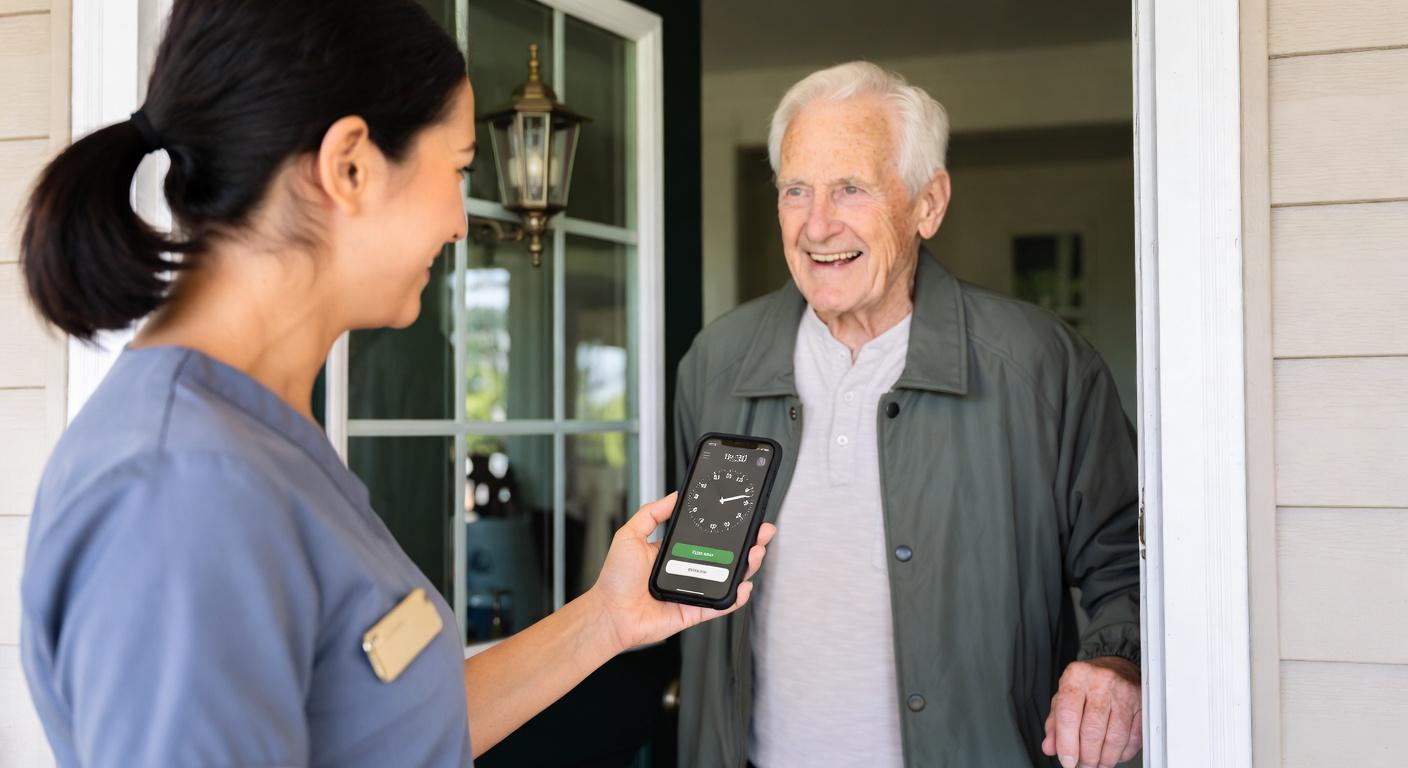
GPS verification is the most common EVV method for community-based services. Here's how it typically works:
- Caregiver arrives at client location
- Opens mobile app and taps "Clock In"
- App captures GPS coordinates and compares to client address
- If within radius (usually 0.5-1 mile), clock-in is verified
- If outside radius, caregiver is prompted to provide explanation
- At visit end, same process for clock-out
What About Rural Areas?
Rural Washington presents unique challenges:
- GPS accuracy can vary
- Some clients don't have standard addresses
- Cell service may be limited
Good EVV systems handle this by:
- Allowing wider verification radius when needed
- Supporting offline clock-in with sync when connected
- Providing manual override with documentation
EVV and Family Transparency
EVV isn't just about compliance—it's an opportunity to build trust with families.
When you capture verified visit data, you can share it with families:
- "Maria arrived at 2:03 PM"
- "Visit verified at [address]"
- "Services provided: Community Engagement"
Families don't have to wonder if care happened. They can see it.
Preparing for EVV Audits
Washington conducts audits to verify EVV compliance. Here's how to prepare:
What Auditors Look For
- Consistency between EVV data and billing claims
- Patterns of exceptions or overrides
- Evidence that services were actually provided
- Staff training documentation
Documentation to Maintain
- EVV capture records for all visits
- Exception reports with explanations
- Override logs with approvals
- Training records for caregivers
- System configuration documentation
Red Flags That Trigger Audits
- High rate of manual overrides
- Clock-in times that don't match billing
- Multiple staff clocking in at same location simultaneously
- Consistent patterns of "just in time" arrivals
Choosing an EVV System
When evaluating EVV solutions, consider:
Must-Have Features
- Real-time GPS capture
- Mobile app for caregivers
- Automatic data export to ProviderOne
- Exception reporting and management
- Offline capability
Nice-to-Have Features
- Family portal for visit visibility
- Integration with scheduling and billing
- Biometric verification (face/fingerprint)
- Automatic mileage tracking
- Case manager dashboard
Questions to Ask Vendors
- How do you handle offline clock-ins?
- Can we customize the verification radius?
- How does data export to ProviderOne work?
- What reports are available for compliance?
- How do caregivers handle exceptions?
The Bottom Line
EVV compliance doesn't have to be a burden. With the right system, it can actually improve your operations:
- More accurate billing from automated time capture
- Better family relationships through transparency
- Reduced audit risk with proper documentation
- Easier payroll from verified timesheets
The agencies that thrive aren't the ones fighting EVV—they're the ones using it as a foundation for better care.