
Table of Contents
What Are DDA Waivers?
Put This Into Practice
CareCade makes it easy to implement best practices for home care management.
In Washington State, the Developmental Disabilities Administration (DDA) provides services to people with developmental disabilities through Home and Community-Based Services (HCBS) waivers. These waivers allow individuals to receive care in their homes and communities rather than in institutions.
Each waiver offers different services and is designed for different levels of need. Understanding which waiver your loved one has—or might qualify for—helps you know what services are available.
The Five DDA Waivers
Washington DDA administers five main waivers:
| Waiver | Full Name | Who It Serves |
|---|---|---|
| IFS | Individual and Family Services | People living with family or independently who need moderate support |
| Basic Plus | Basic Plus | People needing more services than IFS provides |
| Core | Core Waiver | People needing comprehensive services including residential options |
| CPP | Community Protection Program | People needing specialized behavioral support and supervision |
| CIIBS | Community Intermediate Integration and Behavioral Support | People with intensive behavioral needs transitioning from institutions |
IFS Waiver (Individual and Family Services)
The IFS waiver supports individuals who live with family members or independently and need moderate support services.
Who Qualifies
- Individuals with developmental disabilities
- Living with family or in their own home
- Needing support but not 24/7 supervision
Available Services
- Community Engagement
- Life Skills
- Respite Care
- Staff & Family Consultation
- Assistive Technology
- Environmental Adaptations
- Peer Mentoring
- Person-Centered Plan Facilitation
- Supported Parenting
- Therapeutic Adaptations
- Specialized Clothing
- Vehicle Modification
Service Limits
IFS has an aggregate (total) budget limit that caps yearly spending on certain services.

Basic Plus Waiver
Basic Plus provides more services than IFS for individuals who need additional support but don't require residential services.
Who Qualifies
- Individuals with developmental disabilities
- Needing more support than IFS provides
- Living with family or independently
Available Services
Everything in IFS, plus:
- Community Inclusion (for employment)
- Individualized Technical Assistance
- Individualized Supported Employment
- Extended State Plan Services (age 21+)
- Remote Support
- Wellness Education
Key Differences from IFS
- Higher aggregate budget limits
- Access to employment services
- Extended therapy services for adults

Core Waiver
The Core waiver provides comprehensive services, including residential habilitation options, for individuals needing significant support.
Who Qualifies
- Individuals with developmental disabilities
- Needing comprehensive services
- May require residential support
Available Services
Everything in Basic Plus, plus:
- Residential Habilitation (group homes, staffed residential, supported living)
- Community Transition (help moving from institutions)
- Supported Parenting
Residential Options
Core waiver participants may live in:
- Family home with Community Engagement support
- Supported living (own apartment with staff support)
- Group homes
- Staffed residential facilities
- Adult family homes
- Companion homes
Key Differences
- Access to residential services
- Higher levels of supervision available
- More comprehensive behavioral support

CPP Waiver (Community Protection Program)
CPP serves individuals who need specialized behavioral support, often those who have been involved with the criminal justice system or who have behaviors that pose community safety concerns.
Who Qualifies
- Individuals with developmental disabilities
- Requiring enhanced supervision
- Often court-involved or with significant behavioral needs
Available Services
- Residential Habilitation with enhanced supervision
- Specialized Evaluation and Consultation Services
- Individualized Supported Employment
- Community Transition
- All standard services
Specialized Features
- Enhanced background check requirements for providers
- Specialized treatment planning
- Coordination with courts and legal system when applicable

CIIBS Waiver
CIIBS (Community Intermediate Integration and Behavioral Support) serves individuals with intensive behavioral needs, often those transitioning from Residential Habilitation Centers or other institutional settings.
Who Qualifies
- Individuals with developmental disabilities
- Intensive behavioral support needs
- Often transitioning from institutions
Available Services
- Equine Therapy
- Music Therapy
- Peer Mentoring
- Person-Centered Plan Facilitation
- Specialized Clothing
- Vehicle Modification
- All standard services
Unique to CIIBS
- Therapeutic options not available on other waivers
- Specialized support for community transition
- Intensive behavioral services

Services Available on All Waivers
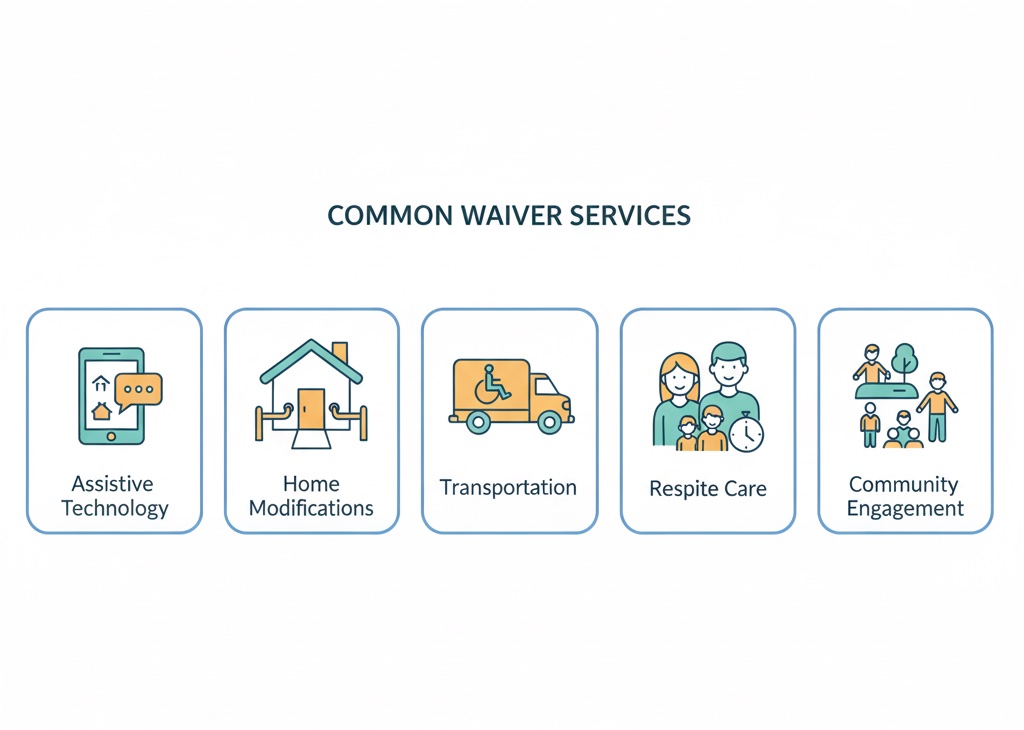
Some services are available regardless of which waiver you have:
- Assistive Technology: Devices and equipment to support independence
- Environmental Adaptations: Home modifications for safety and accessibility
- Nurse Delegation: Training for nursing assistants on delegated tasks
- Specialized Equipment and Supplies: Medical equipment and supplies
- Staff & Family Consultation: Guidance for families and caregivers
- Transportation: Mileage reimbursement for waiver services
- Risk Assessment: Professional evaluation when needed
How to Know Which Waiver You Have
Your DDA case manager can tell you which waiver your loved one is enrolled in. This information is also in the Person-Centered Service Plan (PCSP).
If you're not sure, ask:
- Your DDA case manager
- Your home care provider
- The DDA office in your region
Changing Waivers
If your loved one's needs change, they may be able to move to a different waiver:
- Increasing needs: Moving from IFS to Basic Plus or Core
- Decreasing needs: Moving from Core to Basic Plus or IFS (rare)
- Specialized needs: Moving to CPP or CIIBS if qualifying criteria are met
Your case manager initiates waiver changes based on assessments and need.
Finding Providers for Your Waiver
Not all providers serve all waivers. When searching for home care:
- Know which waiver you have
- Filter by waiver type in provider directories
- Ask providers which waivers they accept
- Verify with your case manager
Questions to Ask Your Case Manager
If you're confused about waivers:
- Which waiver is my loved one currently on?
- What services are available under this waiver?
- Are we using all the services we could be?
- Would a different waiver better meet our needs?
- What's the process if we need more services?

The Bottom Line
Understanding your waiver helps you:
- Know what services are available
- Advocate for appropriate support
- Find the right providers
- Plan for future needs
Your case manager is your best resource for waiver questions. Don't hesitate to ask.