Table of Contents
The Moment Everything Changes
Simplify Your Home Care Operations
CareCade helps DDA and HCBS providers manage scheduling, EVV, and billing in one platform.
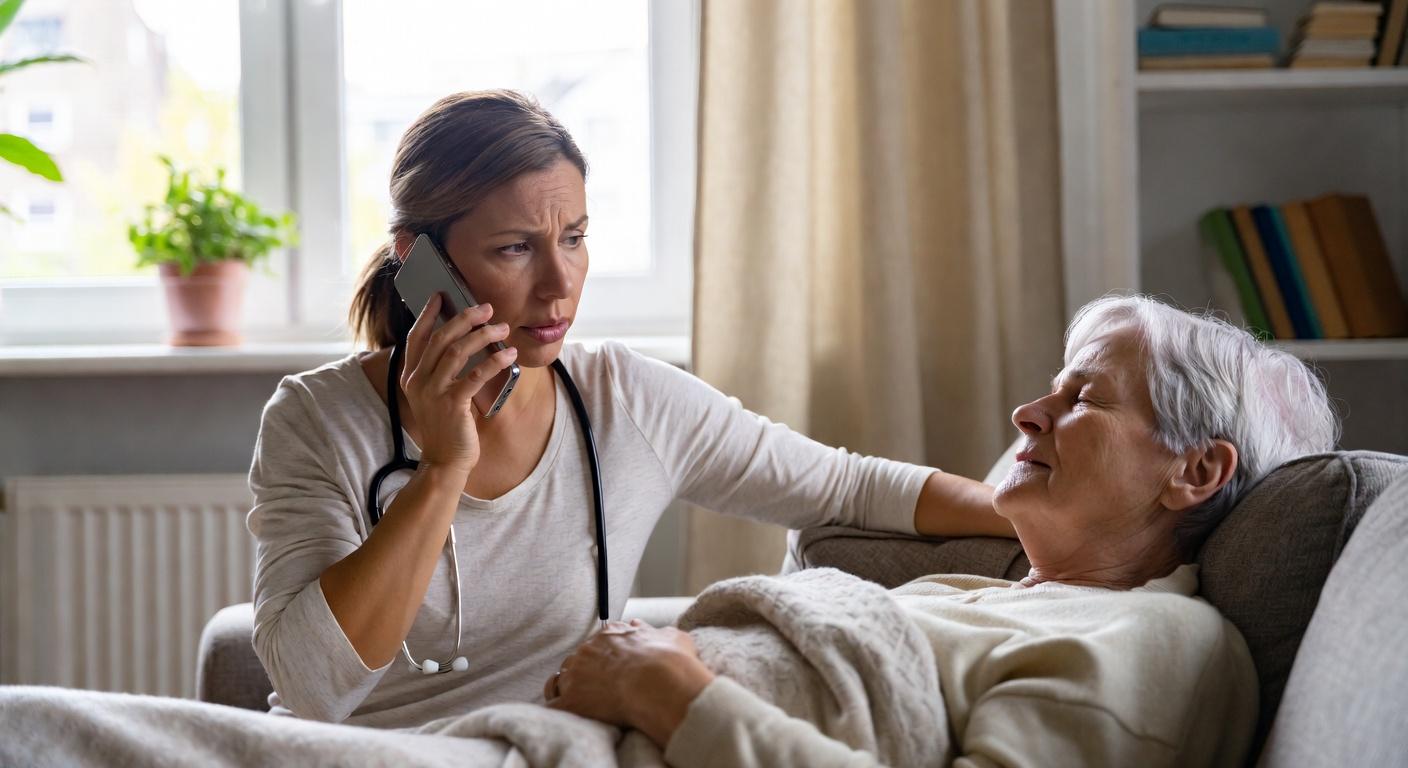
It starts as a normal visit. You're working with a client on their daily routine. Then something happens:
- The client falls
- A behavioral incident occurs
- A medical emergency develops
- Something in the environment isn't safe
In that moment, everything changes. What you do next matters enormously—for the client, for the family, for the provider, and for you.
Why Documentation Matters
After an incident, questions arise:
- What exactly happened?
- When did it occur?
- What did the caregiver do?
- Who was notified?
- What was the outcome?
If documentation happens hours or days later, memory fades. Details get confused. The story becomes harder to verify.
But if documentation happens in real-time—while you're still at the scene, while details are fresh—everything changes.
The Old Way: Paper and Delay
Traditional incident reporting looks like this:
- Incident occurs
- Caregiver finishes the visit
- Caregiver goes home
- Hours later, caregiver fills out a paper form
- Form gets to the office eventually
- Manager reviews, maybe calls with questions
- Days pass before family is informed (if at all)
By the time anyone sees the report, the moment is gone. Details are fuzzy. Follow-up is delayed.
The Real-Time Way
Real-time incident reporting changes the timeline:
- Incident occurs
- Caregiver taps "Report Incident" immediately
- Selects incident type (behavioral, medical, safety, emergency)
- Adds description—text or voice note
- GPS and timestamp captured automatically
- Photos added if relevant
- Manager notified instantly
- Documentation complete before leaving the scene
The entire process takes minutes. The record is permanent, timestamped, and verified.
Protecting Caregivers
Real-time documentation protects caregivers in several ways:
Against False Accusations
If a family later claims something happened that didn't, or didn't happen that did, you have a timestamped record created at the scene.
"According to my incident report filed at 2:47 PM, here's exactly what occurred..."
Against Memory Distortion
Even honest memories shift over time. A report filed in the moment captures what actually happened, not what you reconstruct later.
Against He-Said-She-Said
When there's a dispute, the person with contemporaneous documentation has credibility. Your immediate report carries more weight than anyone's after-the-fact account.
Against Feeling Alone
In a crisis, caregivers can feel isolated. Knowing you can tap a button and immediately connect to your provider, document what's happening, and get support—that's not just practical. It's psychological safety.
Protecting Agencies
Agencies benefit equally from real-time documentation:
Liability Protection
Lawsuits often hinge on documentation. An incident report filed at the scene, with GPS verification and timestamp, is powerful evidence.
Compliance Confidence
Many incidents require regulatory reporting within 24-48 hours. When documentation happens in real-time, you're never scrambling to reconstruct what happened.
Quality Improvement
Patterns in incident reports reveal systemic issues. If multiple caregivers report safety concerns at the same location, that's actionable intelligence.
Family Communication
When agencies can show families exactly what happened, when, and what was done, trust increases. Transparency protects relationships.
Protecting Families
Most importantly, real-time incident reporting serves families:
Timely Awareness
Families deserve to know when something significant happens to their loved one. Real-time reporting enables prompt notification.
Accurate Information
The report created at the scene is more reliable than a reconstructed version. Families get the truth.
Appropriate Response
When managers know immediately about incidents, they can ensure appropriate follow-up—medical evaluation, safety remediation, additional support.
Trust Through Transparency
Agencies that document openly build more trust than those that minimize or delay. Families can see that incidents are taken seriously.
The Emergency Protocol
For critical incidents, the protocol escalates:
- Caregiver taps "Emergency"
- Prompted: "Call 911 first if needed"
- System captures emergency type and details
- Manager notified instantly (push + email)
- All relevant contacts alerted based on configuration
- Complete documentation happens alongside response
- Follow-up workflow triggered automatically
The caregiver can focus on the emergency while the system handles notification and documentation.
What Gets Reported
Effective incident reporting covers a range of situations:
Behavioral Incidents
- Physical aggression
- Self-injury
- Verbal aggression
- Property destruction
- Elopement
Medical Events
- Falls
- Seizures
- Choking
- Injury
- Illness symptoms
Safety Concerns
- Environmental hazards
- Equipment problems
- Medication issues
- Inadequate supervision
Emergencies
- Unresponsive client
- Severe injury
- Medical emergency
- Violence or threat
- Missing/wandered client
The Human Element
Technology enables real-time reporting. But the human element matters too.
Caregivers need to know:
- Reporting incidents won't get them in trouble
- Their reports are taken seriously
- Support will follow
- The process is simple
Managers need to:
- Respond promptly to reports
- Support caregivers through incidents
- Use data for improvement, not punishment
- Close the loop with families appropriately
The best incident reporting combines good technology with healthy culture.
Being There When It Matters Most
"Be There" means different things in different moments.
In normal visits, it means presence and engagement.
In incidents, it means something more: being there with documentation, support, and transparency.
When something goes wrong, everyone—caregivers, agencies, families—deserves the protection that real-time reporting provides.
That's what being there looks like when it matters most.