Table of Contents
It started as plumbing, not a pitch
Simplify Your Home Care Operations
CareCade helps DDA and HCBS providers manage scheduling, EVV, and billing in one platform.
CareCade didn't begin in a conference room. It began as a working platform built to run the day-to-day of a real care operation — scheduling, billing, compliance. The unglamorous plumbing that decides whether a provider survives the month or drowns in paperwork.
The goal was simple: build software good enough that a real provider would bet their operation on it.
The first real test
Our first enterprise client was Advanced Care LLC, a Washington DDA provider. Not a pilot, not a demo — a live agency with real clients, real caregivers, and real state contracts on the line.
On the platform, the operation scaled fast: clients served grew from 100 to 150+, and the field team grew from 44 to 66 coaches working from mobile apps out in the community. Scheduling, GPS-verified visits, DSHS reporting, and ProviderOne billing ran in one place. The software stopped being a tool and became the backbone of how the agency ran.
The proof is in the public record
Here's the part we don't have to ask you to take on faith. Washington State publishes provider payment data at fiscal.wa.gov. The numbers are public, and you can look them up yourself.
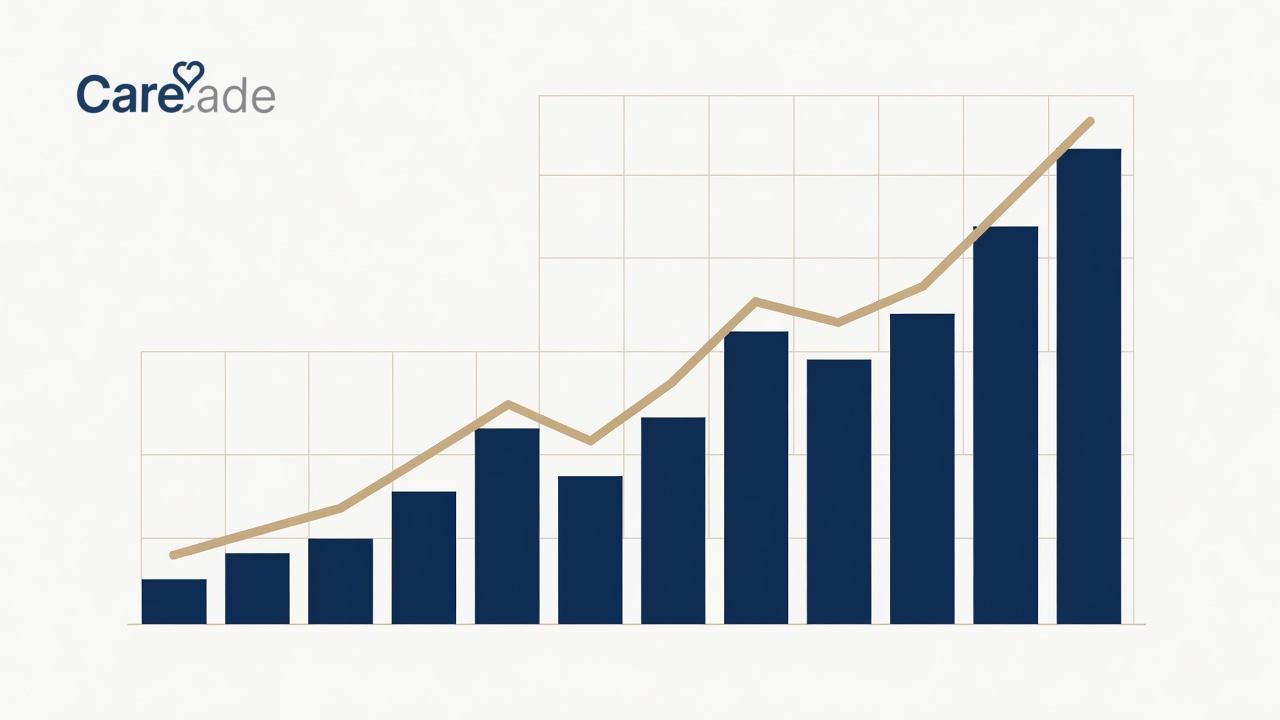
For Advanced Care, state payments grew from roughly $370,000 (Jan–May 2024, before the platform) to roughly $690,000 (Jan–May 2025, on the platform) — an 86% increase in the cleanest possible before/after. Across the full 2025 year, the growth held at 77.6% year over year.
That is government-verified, not client-reported. We didn't optimize a marketing funnel. We helped a care operation capture the revenue it was already earning but losing to broken process.
The honest part
One client, measured against a public payment ledger. That's a strong signal — it's third-party data, not a quote we wrote for them — but it isn't a controlled trial. Revenue growth has many inputs: an agency taking on more clients, rate changes, and demand across the DDA market all move the same number, and the platform can't claim sole credit for any of them.
What the platform can claim is narrower and more useful: it removed the administrative ceiling that normally caps an operation this size, so the hours went into serving more people instead of chasing paperwork. The 86% and the 77.6% are the outcomes that followed. We cite them because they're public and checkable — and we flag their limits because manufacturing certainty would be worse than the truth.
The turn that changed everything
Running a platform this close to the field taught us something spreadsheets never could: the most valuable features weren't the ones we dreamed up. They were the ones the field demanded — small, specific fixes born from watching real care happen, the kind a competitor can't reverse-engineer because they were never sitting where we were sitting.
And a bigger realization landed with it: the real value wasn't the software license. It was the trust and the ecosystem the platform created — connecting the people who actually hold this system together. So we stopped selling software and started building infrastructure.
What CareCade is now
CareCade is care-ecosystem infrastructure for Washington's intellectual and developmental disabilities community:
- Free for the case managers and families who hold this system together.
- Affordable for the providers who deliver the care.
- Built on one non-negotiable: the truth about care should be visible to everyone who depends on it.
We started by making one care operation run better. We're building toward making the whole system honest — the operating system an agency runs on from its first client to its ten-thousandth.
Book a 15-minute demo → · Start your free trial →
Related Articles
- You Started a Home Care Agency. Now What? An Operator's Playbook
- How to Start a Home Care Agency in Washington State
- The DDA Providers Getting the Most State Funding in Washington (2025)
- The Tool Chaos Problem — and the Two Systems That Replace It
Frequently Asked Questions
Are the revenue figures verified?
Yes. Washington State publishes payments to every DDA provider at fiscal.wa.gov. State payments for Advanced Care LLC grew roughly $370,000 → $690,000 comparing Jan–May 2024 (before the platform) to Jan–May 2025 (on the platform) — an 86% increase — and 77.6% across the full 2025 year. It's public data you can look up independently, not a self-reported claim.
Why are there two percentages — 86% and 77.6%?
They measure different windows. The 86% compares the first five months of each year (Jan–May 2024 vs Jan–May 2025) — the cleanest before-and-after around going live on the platform. The 77.6% is the full-year 2025 growth. Both come from the same public payment records.
Does CareCade take credit for the entire increase?
No. Revenue growth has many causes — adding clients, rate changes, and overall demand in the DDA market all contribute. What the platform did was remove the administrative bottleneck that usually caps an operation, freeing time to serve more people. The growth is the outcome that followed, not a guaranteed result of the software alone.
What did Advanced Care run on CareCade?
The full operation: scheduling, GPS-verified EVV, DSHS reporting, and ProviderOne billing — while the agency grew from 100 to 150+ clients and 44 to 66 field coaches working from mobile apps in the community.
How do I try CareCade for my agency?
Start a free trial or book a 15-minute demo. It's free for case managers and families, and affordable for providers — with guides and calculators free to everyone.