Table of Contents
The End of "I'll Document That Later"
Simplify Your Home Care Operations
CareCade helps DDA and HCBS providers manage scheduling, EVV, and billing in one platform.
Picture this: A caregiver spends an hour with a client—helping them prepare lunch, doing range-of-motion exercises, and having meaningful conversation about the client's grandchildren. The visit ends. The caregiver drives to the next appointment.
The documentation? It happens three hours later, at home, from memory. Details are forgotten. Timestamps are approximated. The richness of the interaction is reduced to "Client had good day. Completed ADLs."
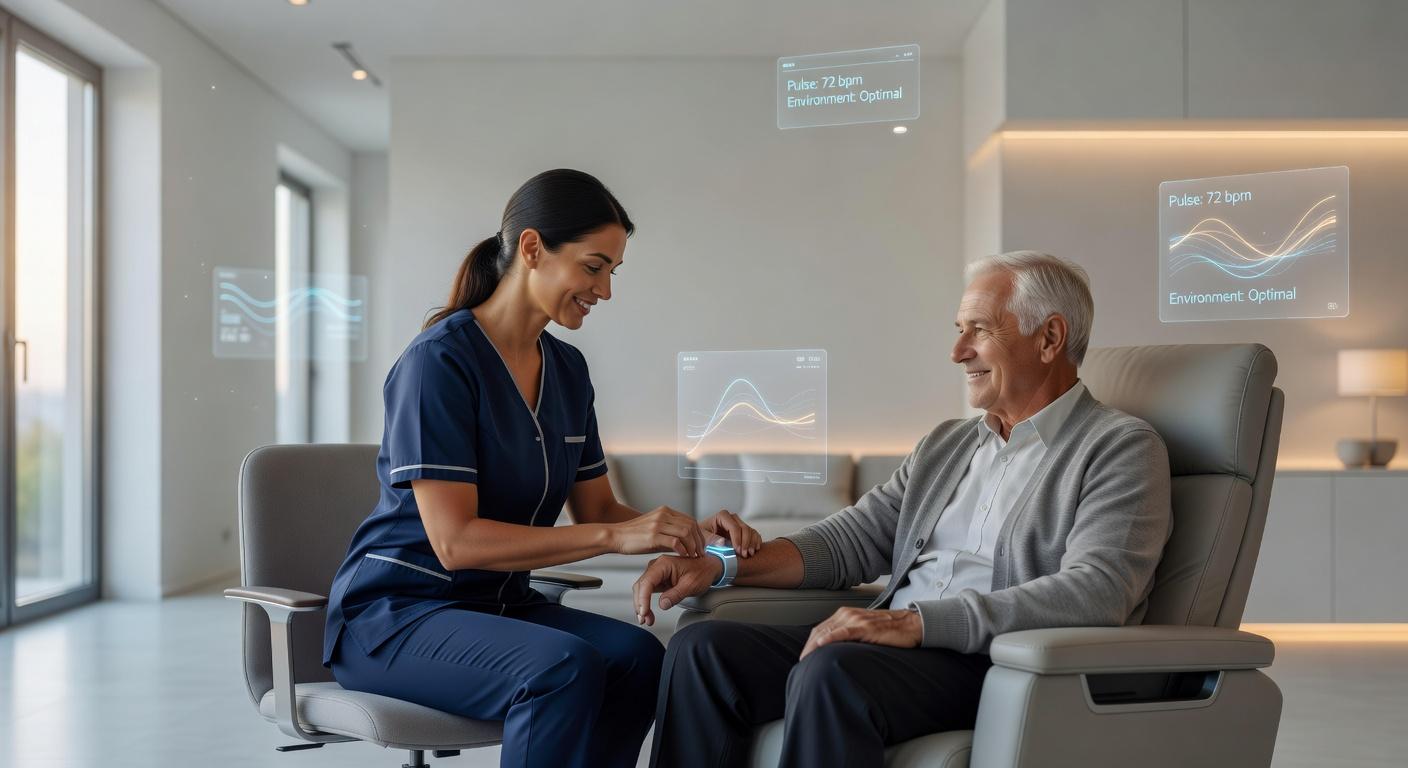
Now picture this: The same visit, but ambient AI is listening. When the caregiver leaves, a complete, accurate note is already drafted—including the specific exercises performed, the topics discussed, the client's stated preferences, and observed mood indicators.
This isn't science fiction. It's arriving now.
What Is Ambient AI Documentation?
Ambient AI refers to artificial intelligence that operates in the background, continuously monitoring and understanding context without requiring explicit user input. In healthcare, it's transforming documentation.
How It Works
- Passive listening: A device (phone, badge, or smart speaker) captures audio during care
- Speech recognition: AI converts speech to text in real-time
- Clinical understanding: Natural language processing identifies medically relevant information
- Structured output: The system generates compliant documentation
- Human review: Caregiver reviews and approves before submission
Current Players
- Nuance DAX (Microsoft): Leading in physician ambient documentation
- Abridge: Ambient AI for clinical conversations
- Suki: Voice-powered assistant for medical documentation
- DeepScribe: Medical scribe automation
- Amazon AWS HealthScribe: Cloud-based clinical documentation
Most current solutions focus on physician offices and hospitals. Home care is the next frontier.
Why Home Care Needs This More Than Anyone
The Documentation Burden Is Crushing
Caregivers spend an estimated 15-25% of their work time on documentation. For a 40-hour week, that's 6-10 hours not spent on actual care.
Our analysis of AI documentation tools showed that even basic AI assistance can reduce documentation time by 50-70%. Ambient AI could push that further—potentially automating 80-90% of routine documentation.
Memory Failures Are Costly
Delayed documentation leads to:
- Inaccurate records that affect care continuity
- Compliance risks when details don't match EVV data
- Billing problems when services aren't properly documented
- Quality issues when nuances are lost
The Workforce Needs Relief
With caregiver turnover exceeding 50% at many providers, any tool that reduces burnout and frustration helps retention. Documentation is consistently cited as a top frustration for direct care workers.
How Ambient AI Transforms Home Care Documentation
Session Notes That Write Themselves
Instead of remembering and typing after the fact:
Current State:
Arrived at client home. Assisted with personal care including
bathing and dressing. Client in good spirits. Prepared lunch.
Left home at scheduled time.
With Ambient AI:
Visit Summary - 9:02 AM to 11:45 AM

Personal Care:
- Assisted with shower (client preferred warm water, used grab bar independently)
- Dressing assistance provided for lower body (client chose blue sweater)
- Oral care completed per care plan

Meal Preparation:
- Prepared turkey sandwich and vegetable soup (client request)
- Client consumed approximately 75% of meal
- Noted client mentioned decreased appetite compared to last week

Observations:
- Client discussed granddaughter's upcoming graduation (positive affect)
- Ambulation stable with walker, no changes noted from previous visit
- Client requested earlier appointment time next week due to doctor appointment

Goals Progress:
- Socialization goal: Engaged in meaningful conversation for 15 minutes
- Independence goal: Client initiated dressing sequence independently
The difference: specificity, accuracy, and actionable detail—captured without the caregiver typing a word.
Real-Time Goal Tracking
Care plans include specific goals. Ambient AI can:
- Recognize when goal-related activities occur
- Track progress across multiple visits
- Flag when goals aren't being addressed
- Suggest goal updates based on observed progress
Medication Documentation
When caregivers assist with medication management:
- Record exactly what was administered and when
- Note client statements about how they're feeling
- Flag potential concerns (missed doses, side effects mentioned)
- Create compliant medication logs automatically
Incident Capture
If something concerning happens during a visit, ambient AI can:
- Capture the exact sequence of events
- Record relevant environmental factors
- Document caregiver response
- Generate incident reports with accurate timestamps
The Privacy Elephant in the Room
Client Consent
Ambient AI requires recording conversations. This raises critical questions:
- How do you get informed consent from clients who may have cognitive impairments?
- What about family members or visitors who enter during care?
- Can clients opt out while still receiving care?
Agencies will need robust consent processes that are:
- Written in accessible language
- Explained verbally to clients and families
- Reviewable and revocable
- Compliant with state privacy laws
HIPAA Compliance
Any ambient AI system handling healthcare information must be:
- HIPAA compliant with proper BAAs
- Using encrypted transmission and storage
- Processing data in secure environments
- Limiting access to authorized personnel
Data Handling
Key questions for any ambient AI vendor:
- Where is audio data stored and for how long?
- Is audio retained after transcription?
- Who can access the raw recordings?
- How is data used for AI training?
- What happens during a data breach?
Technical Challenges Specific to Home Care
Variable Environments
Unlike hospitals or clinics, homes are noisy:
- Background TVs and radios
- Pets and family members
- Street noise and construction
- Variable acoustics
AI must distinguish caregiver-client conversation from environmental noise.
Connectivity Issues
Many home care visits occur in homes with:
- No WiFi
- Weak cell signals
- Rural locations with limited connectivity
Systems need offline capability with later synchronization.
Multi-Language Support
Home care serves diverse populations:
- Clients may speak languages other than English
- Caregivers may code-switch between languages
- Family members may translate
AI must handle multilingual conversations accurately.
Cultural Context
Clinical AI struggles with:
- Colloquialisms and regional expressions
- Cultural ways of expressing pain or distress
- Non-literal communication
- The informal register of home care conversation
What Agencies Should Prepare For
Near-Term (1-2 Years)
Expect vendors to offer:
- Voice-to-text documentation that caregivers speak into their phones
- AI assistance for converting rough notes into compliant documentation
- Integration of voice notes with EVV systems
Medium-Term (2-4 Years)
More sophisticated capabilities:
- True ambient listening during visits (with consent)
- Automatic extraction of care plan progress
- Real-time alerts for concerning observations
- Integration with electronic health records
Long-Term (5+ Years)
Transformational potential:
- AI that predicts client needs based on documented patterns
- Automatic care plan suggestions from accumulated documentation
- Voice interaction for family members to access care information
- Full documentation automation with human review only
How to Evaluate Ambient AI Solutions
When vendors come calling (and they will), ask:
Accuracy Questions
- What's the word error rate for speech recognition?
- How does it perform with accents and dialects?
- What's the accuracy for extracting clinical information?
- Can it distinguish speakers (caregiver vs. client)?
Compliance Questions
- Is this HIPAA compliant with BAA?
- How do you handle consent and revocation?
- What happens to audio after processing?
- How do you ensure EVV integrity when documentation is AI-generated?
Integration Questions
- Does it integrate with our existing home care software?
- Can it populate our specific documentation templates?
- Does it work with our EVV system?
- What's the workflow for caregiver review and approval?
Support Questions
- What training is required for caregivers?
- How do you handle corrections and feedback?
- What's your roadmap for improvement?
- How do you address bias in AI outputs?
The Human Element Remains Essential
Ambient AI is a tool, not a replacement for human judgment. Caregivers will still need to:
- Review all documentation before submission
- Add context the AI might miss
- Correct errors in transcription or interpretation
- Make clinical judgments about what's significant
- Build relationships that go beyond what AI can capture
The goal is freeing caregivers from documentation drudgery so they can focus on care—not replacing their expertise with automation.
Ethical Considerations
Surveillance Concerns
Ambient AI feels different from typed notes. Clients may:
- Feel constantly watched
- Edit their behavior knowing they're recorded
- Experience reduced privacy in their own homes
- Trust caregivers less
Agencies must balance efficiency gains against client comfort and dignity.
Workforce Implications
Some caregivers may feel:
- Monitored and distrusted
- At risk of AI "catching" mistakes
- Deskilled by automation
- Anxious about always being recorded
Clear communication about how AI is used—and how it protects rather than surveils—is essential.
Quality Concerns
AI-generated documentation may be:
- Technically accurate but missing human insight
- Detailed but lacking clinical judgment
- Comprehensive but overwhelming
- Consistent but generic
Human review must remain meaningful, not rubber-stamping.
Frequently Asked Questions
When will ambient AI be available for home care?
Basic voice-to-text and AI-assisted documentation are available now. True ambient documentation for home care is emerging from specialized vendors, with broader availability expected within 2-3 years.
Will this replace caregivers?
No. Ambient AI documents care; it doesn't provide care. The human relationship, judgment, and hands-on assistance cannot be automated. See our analysis of why gig economy models fail care—technology supplements, not replaces.
How will states regulate this?
Regulations are evolving. Expect guidance on consent requirements, data handling, and EVV integration. Some states may require specific disclosures or opt-out rights.
What about clients who refuse?
Agencies will need alternative documentation methods for clients who opt out. This may create equity concerns if ambient AI becomes standard and manual documentation becomes a burden.
Preparing Your Agency
- Assess current documentation pain points - Understand where time is lost
- Evaluate your technology stack - Ensure readiness for integration
- Develop consent protocols - Prepare for privacy requirements
- Train on AI literacy - Help staff understand capabilities and limits
- Pilot carefully - Start with willing caregivers and clients
- Maintain alternatives - Keep manual documentation capability
The Future Is Listening
Ambient AI represents one of the most significant shifts in how care is documented since the transition from paper to electronic records. Done well, it could:
- Give caregivers hours back for actual care
- Improve documentation quality and accuracy
- Reduce burnout and turnover
- Create richer data for quality improvement
Done poorly, it could:
- Create surveillance anxiety
- Generate compliance nightmares
- Damage caregiver-client relationships
- Raise liability concerns
The technology is coming. How we implement it will determine whether it helps or harms the people we serve.
CareCade is committed to thoughtful technology that serves caregivers and clients. Our AI documentation features are designed with human oversight at the center. Request a demo to see how we're building the future of home care technology responsibly.